



Why More Ultimate Shine Customers Are Making the Switch to Smarter Washing
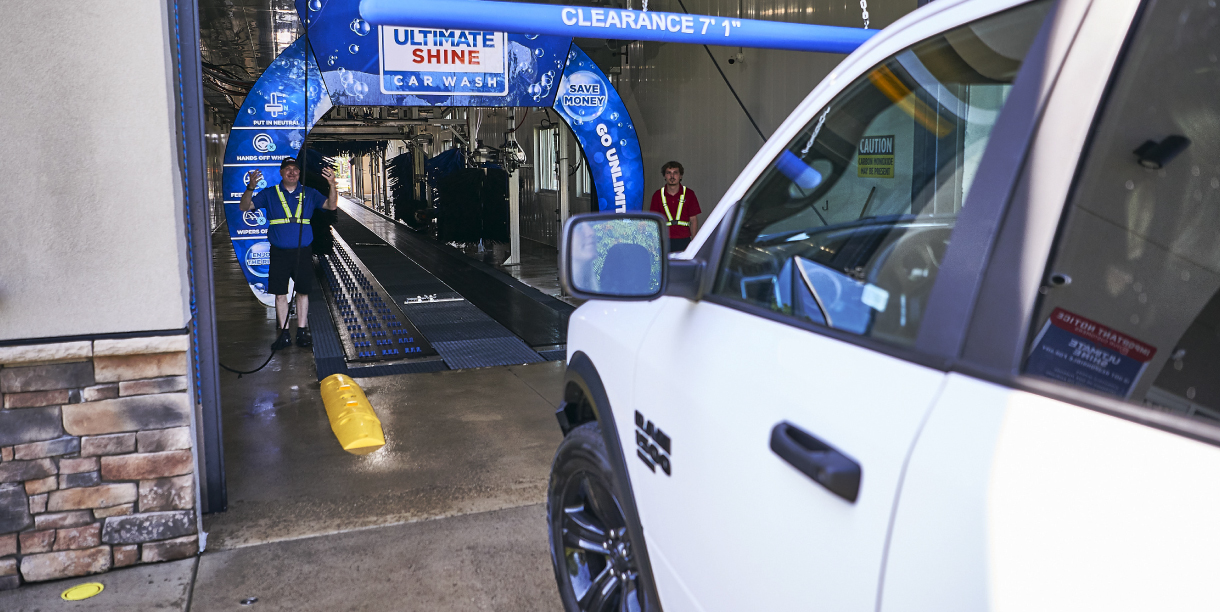
Pulling up to a car wash tunnel can be a little intimidating. Am I lining up my tires right? Will someone be there to help me? Will the brushes be too hard on my car?
At Ultimate Shine, we get it. If you’ve ever felt uneasy about driving into a car wash, you’re not alone. We work hard to eliminate that anxiety every day, and we’ve designed our wash to feel simple and welcoming from start to finish.
An Ultimate Shine wash is about more than just a car wash. Here’s how our helpful team members and proven technology work together to make every visit smooth and stress-free.
How Much Water Do Car Washes Use?
How much water do car washes use compared to a driveway wash? A professional car wash service uses, on average, 9 to 15 gallons of water, with the majority of wastewater captured, treated, and reused. Water that car washes cannot reclaim is directed to municipal treatment plants, which remove residual oils, detergents, and debris before returning the water to the environment. In contrast, a driveway wash with a garden hose can waste 80-140 gallons.
Why Home Washing Uses More Water Than You Think
Why do driveway washes use so much water? The garden hose is a major culprit. Unless you have a spray head, the hose runs continuously, with no shutoff between rinse cycles. Even if you shut off the hose when you’re not using it, presoaking, scrubbing, and rinsing multiple times result in significant water consumption.
Where the water goes only adds to the problem. With no other way to catch and reclaim water, the water used in a driveway car wash drains directly into the storm drain.
The Environmental Case for Switching
Several factors work in tandem to create an environmentally friendly car wash. Here are three reasons to choose a professional car wash instead of a water-intensive driveway wash.
Storm Drains vs. Treatment Facilities
During a driveway wash, once water drains into storm drains, it’s gone, with no opportunity for reclamation. Professional car washes capture runoff in underground tanks, where water treatment removes solids and contaminants. The car wash then reuses the water during the early stages of the washing process, with the final rinse using fresh water. Using these methods lets professional car washes recycle up to 80% of water.
What’s in That Runoff?
Water use isn’t the only consideration when choosing a smart, environmentally friendly car wash. Dirt, detergents, oils, and waxes contaminate water during washing. If these contaminants drain down storm drains, they can pollute local waterways.
By treating runoff, car washes keep these contaminants out of the environment. Water that the car wash cannot reclaim is directed to treatment plants for cleaning.
A Cleaner Car and a Cleaner Community
When you use an environmentally friendly car wash, you get the double benefit of a cleaner car and a cleaner environment. The second may not be as obvious as the first, but it’s better for everyone. And while it may not seem noticeable, the environmental benefits mount up quickly with multiple washes.
Making the Switch Is Easier Than You Think
An environmentally friendly car wash isn’t just a sustainable choice: it’s a quick, affordable solution. You get a clean car with no effort, no garden hose or other equipment needed. Check out your nearest Ultimate Shine location for our express wash options — perfect for routine vehicle maintenance.